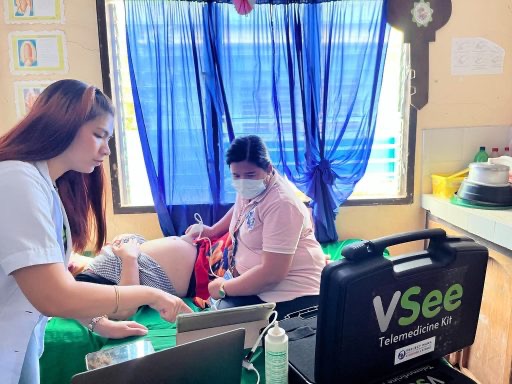
Clinic staff performs prenatal checkup using VSee tools.
VSee, working with Stanford and Ateneo de Zamboanga Universities, has launched Project MAMA (Mom's AI for Maternity Aid) — a pilot program aimed at reducing maternal mortality in underserved, remote regions of the Philippines. Using VSee's secure, customizable digital health building blocks and AI technologies, the program connects mothers with maternal care physicians to detect problems early and reduce risks of complications and death.
The WHO reports that approximately 287,000 women died from pregnancy and childbirth-related complications in 2020 — most from preventable causes like postpartum hemorrhage, infections, and hypertensive disorders. Tragically, 92% of these deaths occur in low-resource areas where women lack access to skilled obstetric care. Project MAMA aims to change that, bridging the gap through AI telehealth and remote obstetric support.
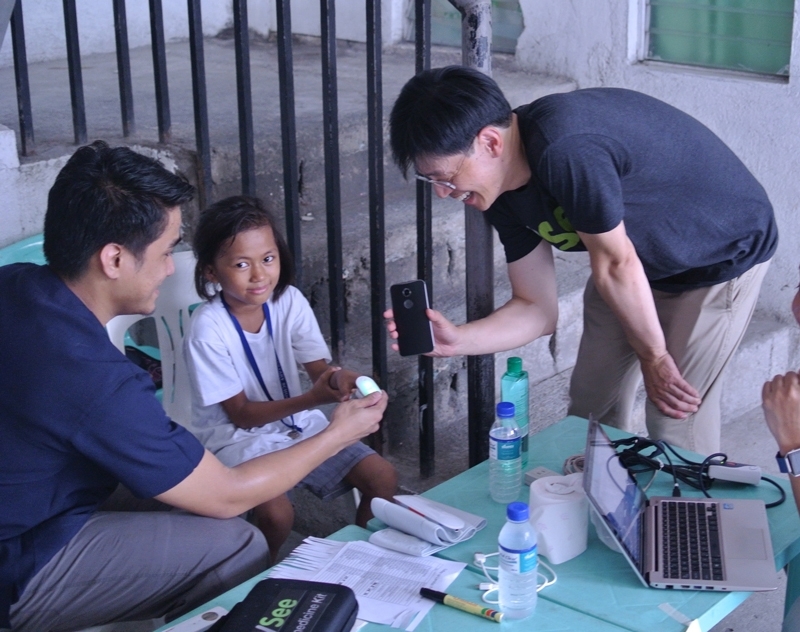
Barangay health workers prepare devices for virtual checkups.
In many parts of Zamboanga, Philippines, pregnant women complete their entire pregnancy without ever seeing a specialist. Clinics rely on paper records, lack diagnostic tools, and have no consistent access to medical experts — meaning routine risks can escalate into life-threatening complications undetected.
Project MAMA is a four-month research initiative testing how digital tools can close that gap. Piloted in the municipality of Ipil, Zamboanga Sibugay, it equips barangay clinics with tools for remote consultations, pregnancy tracking, and maternal health education — reaching mothers who would otherwise go without routine checkups.
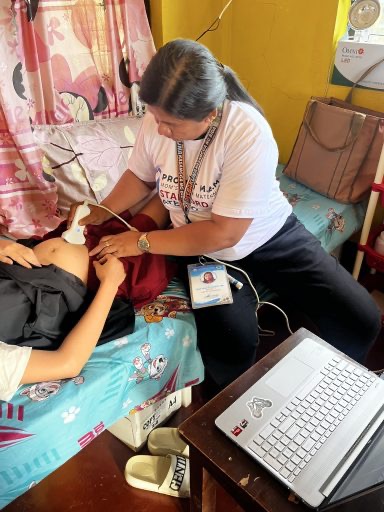
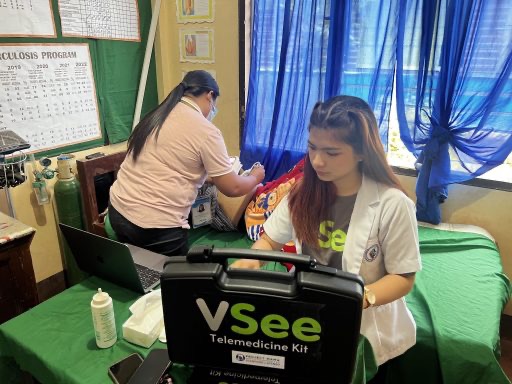
OB screening using a portable ultrasound.
The project runs in Barangay Timalang, Barangay Tiayon, and Barangay Maasin — areas classified as Geographically Isolated and Disadvantaged Areas (GIDAs). Most participants do not own a mobile phone, as these mountain areas receive no cell reception. Barangay Health Workers (BHWs) physically visit households to announce and remind participants of their prenatal appointments.
Barangay clinics now use VSee's EMR system to maintain a digital registry of pregnant patients, replacing paper records. Remote physicians from Ateneo de Zamboanga review records at each virtual visit, monitoring for risks and guiding early interventions.
Local midwives use VSee's AI-powered chatbot — trained by Stanford OB-GYN doctors — to ask clinical questions and receive real-time responses in either English or the local Bisaya language. Stanford specialists regularly review AI answers for accuracy.
OB-gyns and maternal care specialists conduct virtual consultations using VSee telemedicine kits equipped with ultrasound, ECG, digital stethoscope, pulse oximeter, and diagnostic scopes. For many mothers, this was the first ultrasound of their lives.
The browser-based VSee Clinic Waiting Room also allows uploading of educational posters and videos, so patients can learn about prenatal care, safe delivery, and newborn health while waiting — improving health literacy in communities with no prior access to structured maternal health education.
VSee, with Starlink for broadband, powers the entire system. Most healthcare platforms require months of setup or developer input for basic updates. VSee's flexible digital health building blocks allowed the project to launch in just 2 to 4 days — using a pre-configured remote medic workflow as the base, then custom-configuring the intake process for prenatal OB-GYN visits in two days.
All remote specialists and local midwives were trained and ready within two days, completing walkthrough sessions and test calls in about an hour. Local midwives received more intensive 1-on-1 training with the OB sonologist on ultrasound and diagnostic scopes. The VSee team provides ongoing technical support so providers can focus entirely on patients.
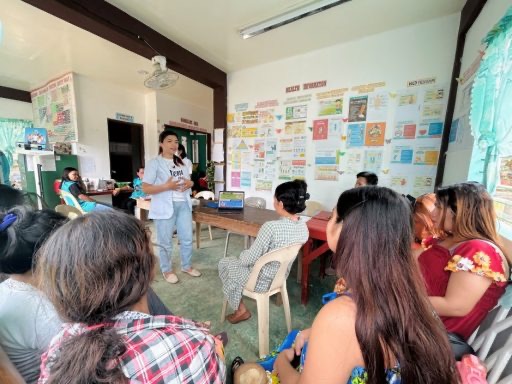
Prenatal education session at barangay clinic.
Three weeks into the pilot, Project MAMA is running steadily. Most participating mothers have completed their second of four scheduled prenatal checkups. AI risk screening, virtual consults, and education tools are active and in use across all three barangays. Clinical outcomes continue to be tracked through the full four-month pilot. The next phase will measure effectiveness, focus on long-term care continuity, and explore expanded use of the AI component.
Stay tuned for more Project MAMA updates.