Browse by category

Find what you’re looking for

Filter to what you’re shopping for — the whole card opens the product page.
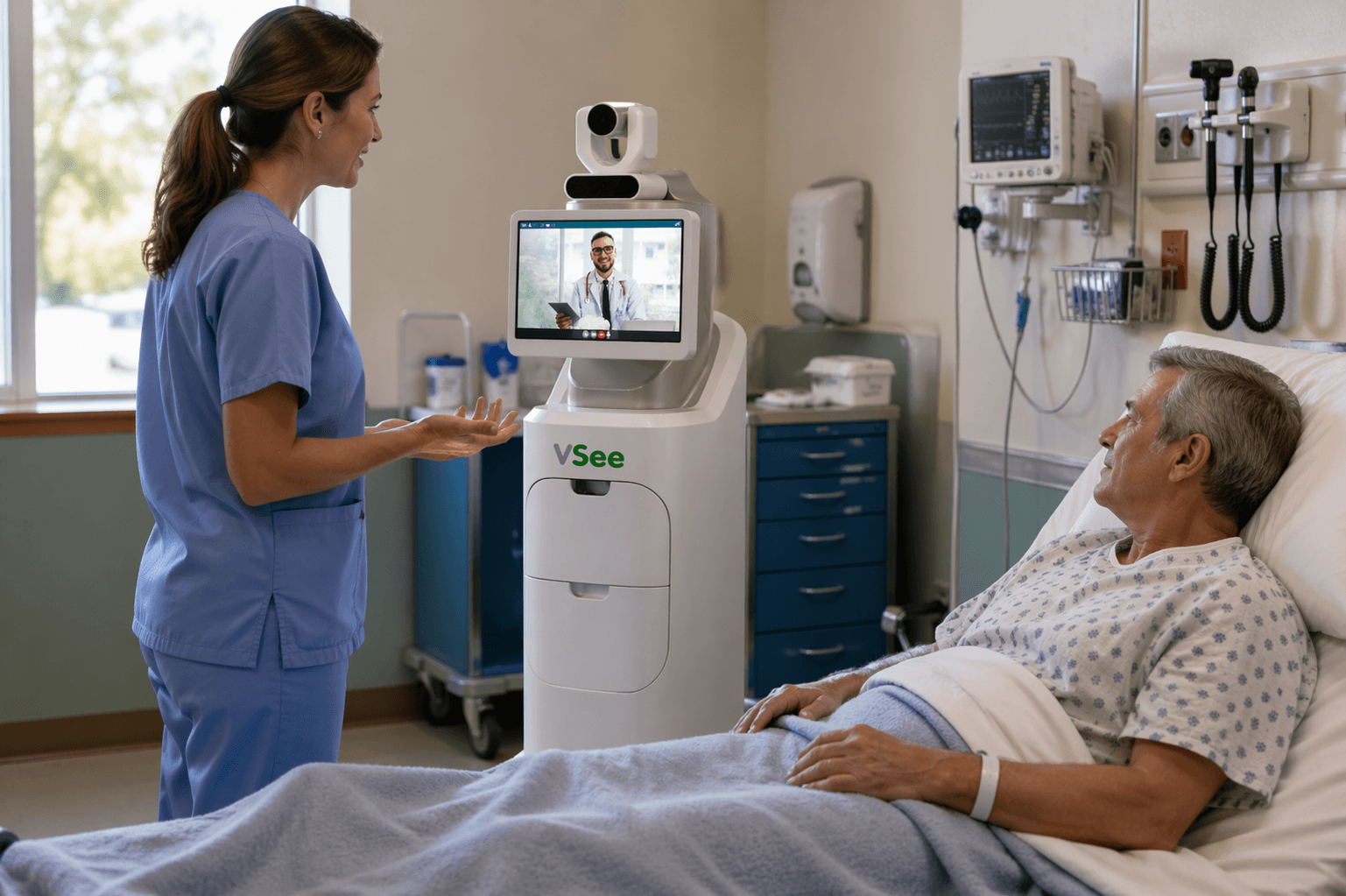
AI RobotRobot photo
AI Robot
Autonomous robot that navigates to the bedside on its own — bring a remote specialist wherever they’re needed.
Telehealth cartsCart photo
Telehealth carts
Bring remote specialists to the bedside for inpatient, ED, SNF, and specialty consults.
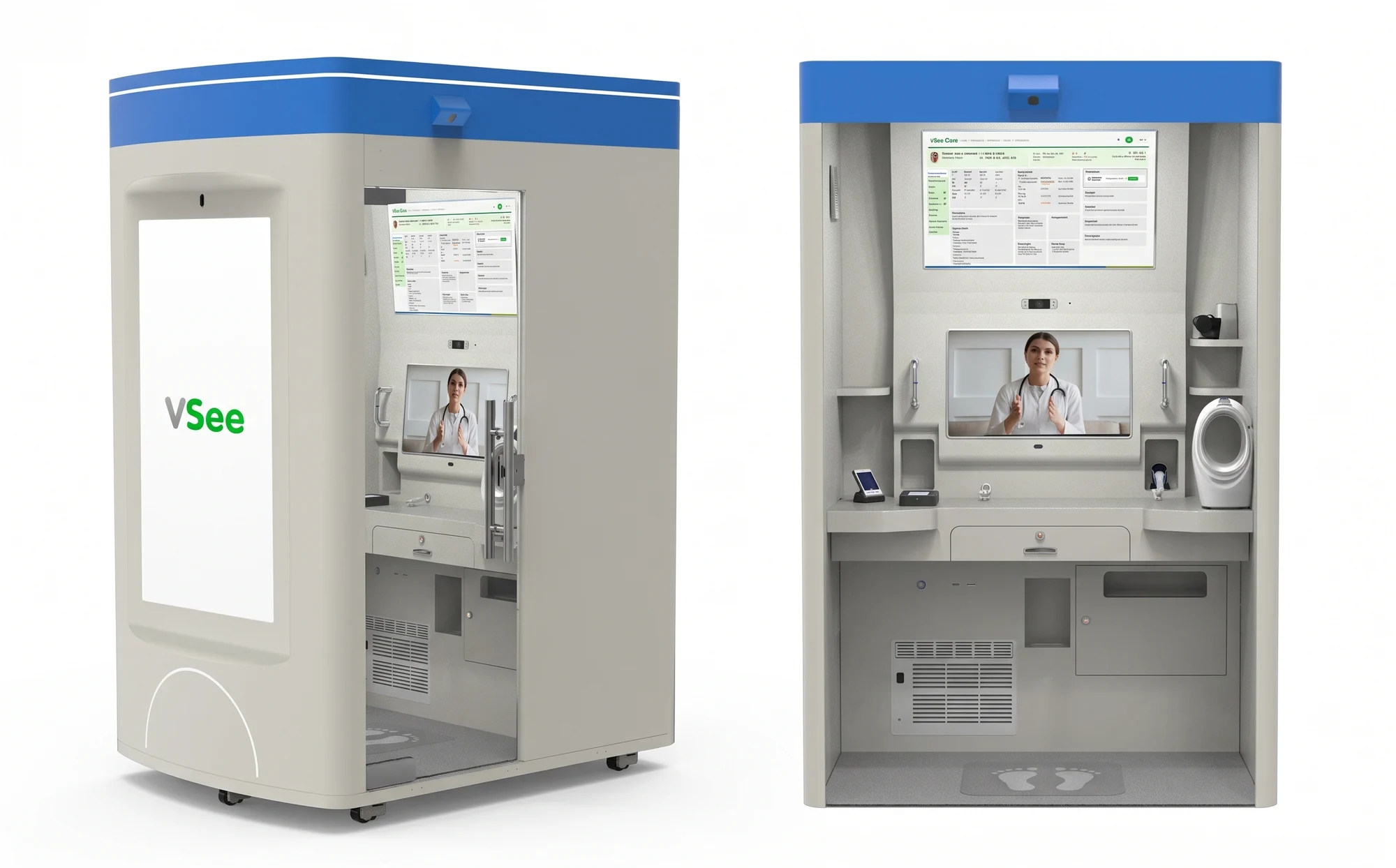
KiosksKiosk photo
Kiosks
Create secure, self-service community access points for virtual care in rural settings.
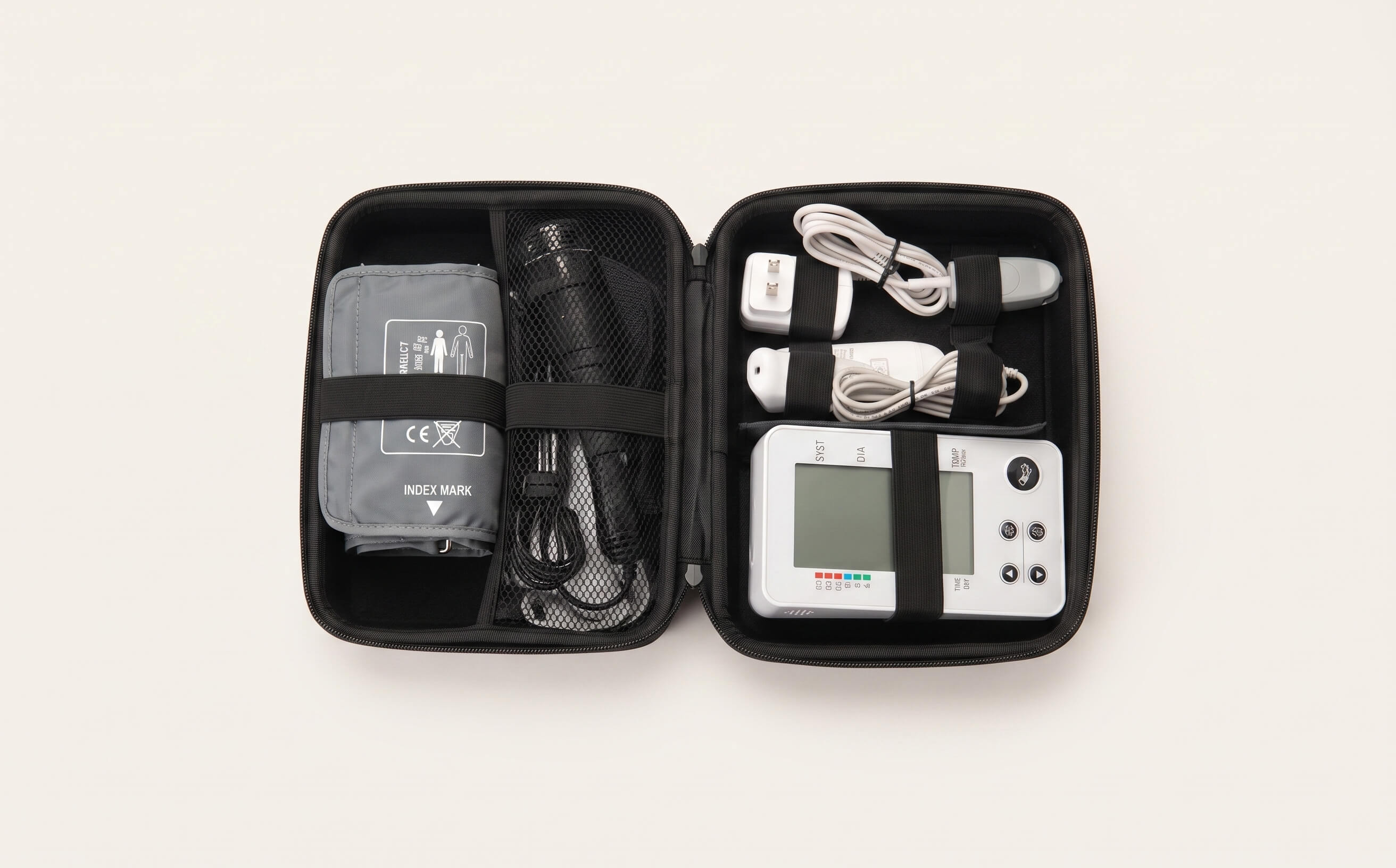
Mobile telehealth kitsKit photo
Mobile telehealth kits
Support mobile clinics, home visits, disaster response, and community-based care.
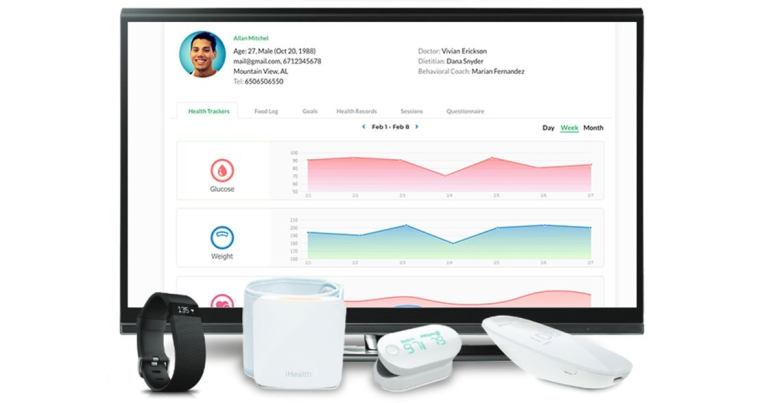
Remote patient monitoringRPM devices photo
Remote patient monitoring
Monitor chronic and high-risk patients from home with connected devices.
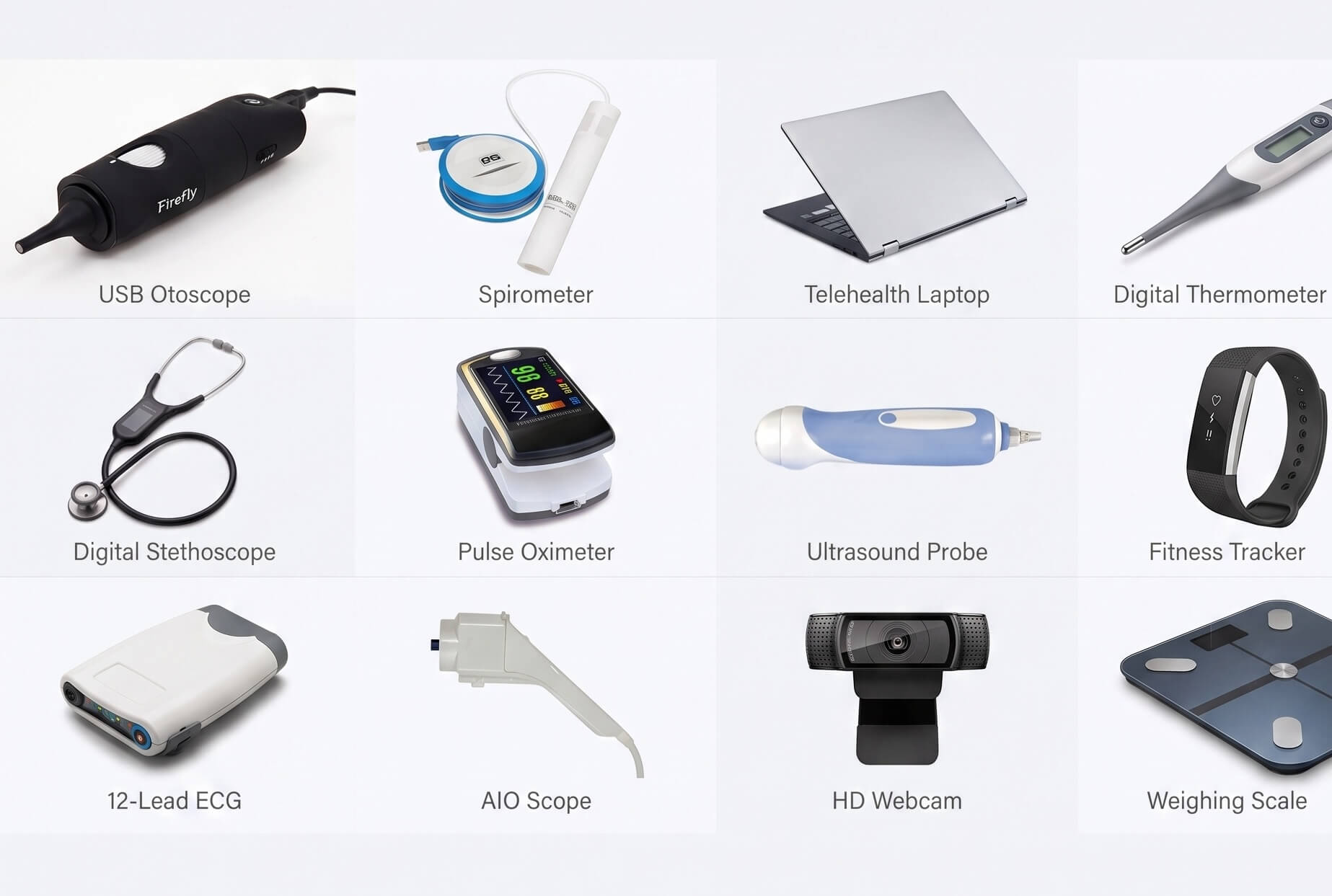
Peripherals & devicesDevices photo
Peripherals & devices
Digital stethoscopes, otoscopes, dermascopes, PTZ cameras, tablets, and imaging that add to any cart, kit, or kiosk.
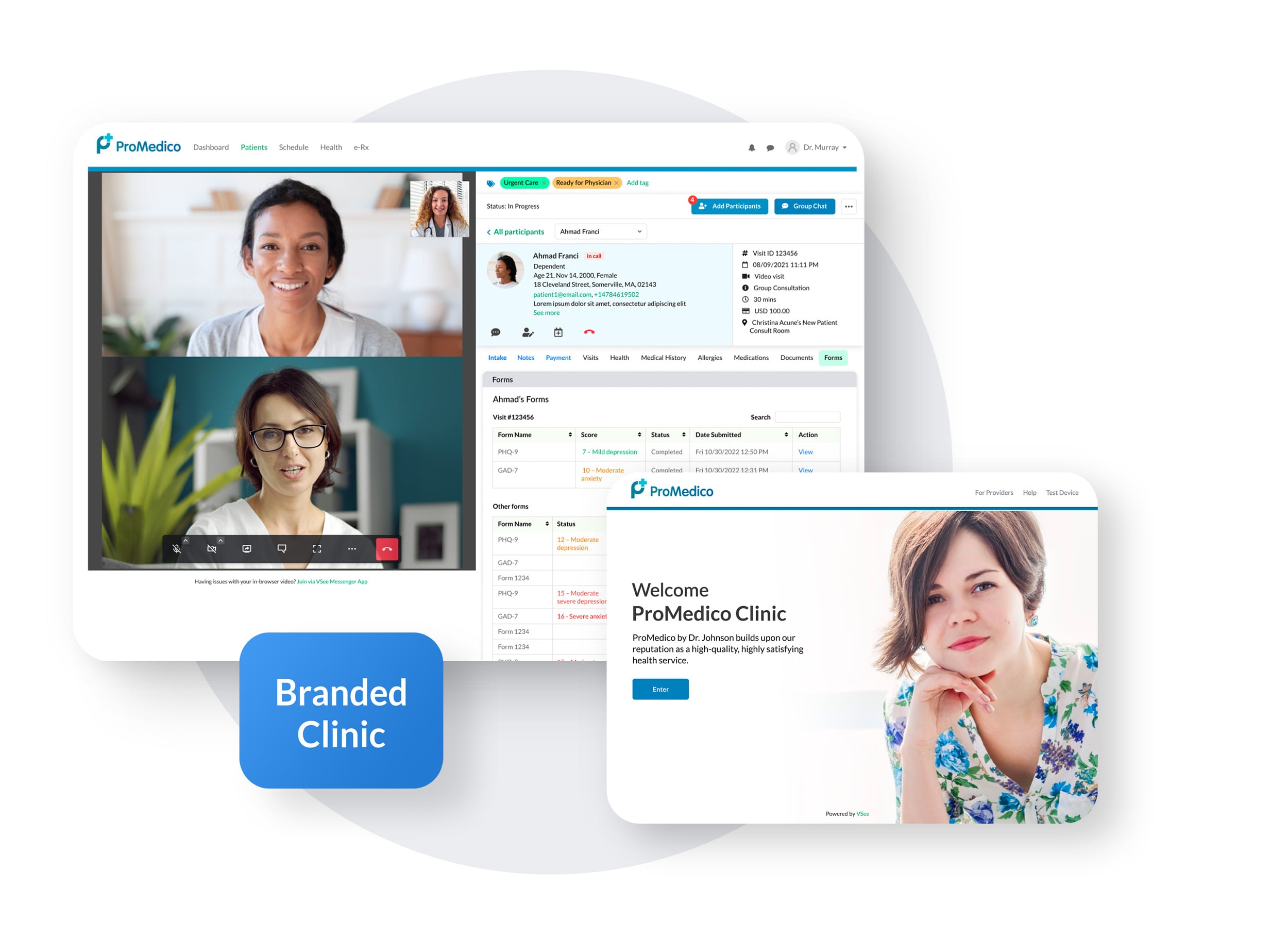
Enterprise Software PlatformEnterprise Software Platform UI
Enterprise Software Platform
White-label enterprise virtual-care platform — intake, scheduling, visits, and analytics under your own brand across every site.
Configurable Building BlocksBuilding blocks UI
Configurable Building Blocks
Configurable, no-code virtual-care modules — assemble intake, routing, and care workflows around your own operations.
AI Work EngineAI dashboard
AI Work Engine
Plug 100+ clinical AI tools into your workflows — cut documentation time and flag patient risk early.
Know what you need? Get a quote.
Tell us what you’re shopping for — we’ll send pricing, a spec pack, and the grant documentation to back it.
For buying teams

Quick check your requirements

The fast validation grant, IT, and procurement reviewers look for — security, interoperability, deployment, and grant fit — answered up front.

Reviewer requirements
GRANT · IT · PROCUREMENT
CMS RHT · 6 categories
Secure virtual visits & remote consults
Carts, kits, kiosks & connected devices
Configurable no-code workflows
AI-enabled documentation & automation
EHR integration & interoperability
RPM & chronic-care monitoring
Training, onboarding & deployment
Meets 6 CMS approved-use categories
Solutions builder

Find the solution for your use case

Pick a clinical use case — see the VSee solutions that deliver it and the CMS category it satisfies.

Community & async
Psychiatry & behavioral
PHQ-9 intake auto-routes to crisis or routine care.
SolutionsConfigurable Building BlocksEnterprise Software PlatformKiosks
Grant fitCMS H
Community & async
Wound care
Dermascope images queued with care-plan write-back.
SolutionsPeripheralsConfigurable Building BlocksEnterprise Software Platform
Grant fitCMS CCMS F
Community & async
Dermatology
Store-and-forward skin images reviewed by a remote dermatologist.
SolutionsPeripheralsConfigurable Building BlocksEnterprise Software Platform
Grant fitCMS CCMS F
Community & async
Hospital-at-home
Inpatient-level monitoring delivered in the patient’s home.
SolutionsRPMAI Work EngineConfigurable Building BlocksEnterprise Software Platform
Grant fitCMS DCMS I
Community & async
Tele-mentoring (Project ECHO)
Specialist-led case mentoring that upskills rural clinicians.
SolutionsConfigurable Building BlocksEnterprise Software Platform
Grant fitCMS D
Community & async
Tribal & IHS programs
Culturally-adapted workflows with tribal / IHS billing support.
SolutionsConfigurable Building BlocksEnterprise Software PlatformKiosks
Grant fitCMS C
+ many more specialties supported — dynamic specialist routing covers whatever your community needs.
Grant-ready outcomes & ROI

The results you can measure — and report to CMS

VSee technology helps rural hospitals expand access, cut avoidable transfers, and modernize IT — with the revenue impact to back it in your grant.

Outcomes you can report to CMS
Expand access to specialty & behavioral care
Reduce avoidable transfers, keep patients local
Improve workforce efficiency without adding staff
Support chronic-disease prevention & RPM
Modernize IT & interoperability infrastructure
Generate measurable data for CMS RHT reporting

Recover millions with the Transfer Reduction Model

One 70-bed rural hospital lost $6.65M a year to avoidable transfers. Telehealth can recover up to $5.32M of it — while helping you right-size which service lines stay local (supports CMS Category G).

Where the revenue was going
SpecialtyAnnual transfersRevenue lost
Neurology221$2,629,900
Cardiology175$1,933,750
GI165$1,402,500
Urology90$688,500
Total651$6,654,650
What’s recoverable
Transfers avoidedRevenue retained
10%$665,465
20%$1,330,930
50%$3,327,325
80%$5,323,720
+ $300K–$1.6M / yr recaptured from bypass patients.
Source: VSee Transfer Reduction Model (Lakeside hospital, 12-month data). DRG values: CMS FY2024 IPPS. Retention assumptions: Journal of Rural Health, Health Affairs. Results will vary by hospital.
Enterprise security & compliance
FedRAMP High SOC 2 Type II HIPAA FIPS 140-2 HL7 / FHIR

Rural Health Transformation FAQs

How do I buy VSee hardware  with rural health grant funds?

Every catalog item is tagged to its CMS approved-use category. Request pricing or an RFP-ready spec pack and we'll provide the documentation your grant application and procurement committee need.

What are the CMS Rural Health Transformation Program's approved-use categories?

CMS defines 10 approved-use categories for RHT Program funds, labeled Category A through J. States must apply their award to at least three of them:

  • A — Prevention & chronic disease management: Evidence-based interventions for chronic disease prevention and management
  • B — Provider payments: Payments to health care providers for eligible items or services
  • C — Consumer-facing technology: Technology-driven solutions for chronic disease prevention and management
  • D — Tech-enabled care: Training and adoption support for remote monitoring, AI, or robotics
  • E — Workforce: Recruiting and retaining rural clinical workforce with 5-year service commitments
  • F — IT & cybersecurity: IT infrastructure improvements, including cybersecurity
  • G — Right-sizing delivery systems: Assistance to right-size rural health care delivery
  • H — Mental health & SUD: Substance use disorder and mental health treatment access
  • I — Innovative care models: Value-based care and alternative payment arrangements
  • J — Additional uses: Other uses CMS determines promote sustainable access to rural care

Which VSee solutions map to each CMS RHT category?

VSee's catalog is tagged to the categories it directly supports:

  • A — Prevention & chronic disease management: RPM vital-sign kits, chronic disease population analytics
  • C — Consumer-facing technology: Patient mobile app (virtual visits, RPM), kiosk mode, mobile telehealth kit, white-label enterprise platform
  • D — Tech-enabled care: VSee robot, telemedicine carts, white-label enterprise platform, hospital-at-home pathways, telenursing, AI documentation and predictive-alert tools
  • F — IT & cybersecurity: EHR integration, HL7/FHIR/HIE, offline-capable EMR sync
  • H — Mental health & SUD: Secure virtual visits and async consults via VSee enterprise platform for behavioral health outreach
  • I — Innovative care models: Hospital-at-home pathways, population analytics and billing dashboards that support value-based reporting

Categories B, E, G, and J cover provider payments, workforce hiring, and system-level strategy — decisions your grant team manages directly, not something a technology catalog fulfills.

Can I buy the software separately from the hardware and equipment?

Yes. VSee's customizable digital health building blocks platform can be purchased on its own or bundled with carts, kiosks, robots, and kits; it offers configurable modules, rather than an all-or-nothing platform.

What is the lead time to deploy?

This depends on your customization needs. Weeks, not months. A full telemedicine bridge was deployed in under two weeks during the St. Croix hospital cyberattack.

Free or Plus allows for only one provider.  

Premium and Enterprise VSee offers several different configurations to enable multiple providers and non-clinical staff to work their clinic(s) efficiently, including:

*Enterprise only

Is VSee FedRAMP authorized?

VSee has an agency-specific FedRAMP High Authority To Operate from HHS Administration for Strategic Preparedness and Response (ASPR). It is also HIPAA compliant , SOC 2 audited, and FIPS 140-2 compliant. See full security and compliance at vsee.com/fedramp

Is VSee HIPAA-Compliant?

Yes, VSee allows providers to be fully HIPAA-compliant in two ways:

  • Technical (Does the vendor follow HIPAA recommendations for security and privacy?)
    ‍VSee uses AES 256-bit encryption that complies with the FIPS 140-2 standard to keep patient data secure both at rest and in transmission. Company policy requires completing regular HIPAA security audits and HIPAA training.
  • Legal (Will your vendor sign a HIPAA Business Associate Agreement [BAA] with you?)
    VSee signs a HIPAA BAA for all VSee plans. The BAA is a required legal agreement that makes your vendor liable for any breaches of privacy & security according to HIPAA rules.

Learn more about HIPAA at vsee.com/hipaa.

Does VSee integrate with our EHR (Epic, Cerner, etc.)?

Yes; bi-directional integration via HL7, FHIR, and APIs, plus HIE participation.

What is a telemedicine kiosk, and does it require staff?

A self-service, private space where a patient connects to a remote specialist; no on-site staff is needed to operate it, although some worflow models use a nurse or medical assistant to facilitate the kiosk visit. It expands access under CMS's consumer-facing technology category.

Does VSee provide physicians or clinical staff?

On occasion VSee may supplement physicians and clinical staff via our separate telehealth recruiting unit This American Doc. VSee is a technology company. We primarily provide the software, AI, and equipment that let your clinicians, and the specialists you already partner with, deliver care remotely.

More Than A Platform, We’re Your Trusted Rural Health Technology Partner

Talk to Us Now
NASA